WSET Diploma / D5
WSET Diploma D5: Fortified Wines Study Tools
Compare fortified wine styles and how they are made.
Follow the choices behind Sherry, Port, Madeira, Vins doux naturels and Rutherglen Muscat, from fermentation to maturation.
Practise with real D5 course content below. Free previews, no login needed.WSET Diploma D5 content
What does the D5 Fortified Wines unit cover?
The published D5 scope connects growing conditions, grape growing, winemaking, fortification, maturation, labelling and the wine business with the style, quality and price of principal fortified wines. Candidates must also be able to taste and evaluate fortified wines accurately.
Core principles
Fortification, fermentation, maturation and the factors that influence style, quality and price.
Sherry
Classification, fortification, biological and oxidative maturation, blending and labels.
Port
Extraction, fermentation, fortification and the maturation choices behind contrasting styles.
Madeira
Growing conditions, grape choice, winemaking, heating, oxidative maturation and labels.
Vins Doux Naturels
The principal fortified Grenache and Muscat wines of France.
Rutherglen Muscat
Production, maturation, classification and the resulting Australian fortified wine styles.
Overview
Study fortified wine production and styles
D5 covers production, styles and the wine business for Sherry, Port, Madeira, Vins doux naturels and Rutherglen Muscat. Try a selection of flashcards, questions, writing exercises, tasting references and revision cards below.
- Study window
- 12 months
- Flashcards
- 618
- Multiple Choice
- 223
- Open responses
- 37
- Tasting wines
- 29
- Topic chapters
- 6
01 / Flashcards
Focus on the essentials
Try 12 Essentials flashcards on fortification, flor, maturation and wine style. Reveal each answer and rate how well you knew it.
02 / HoverFlow
Review questions and answers together
Move through the same 12 questions in HoverFlow. Reveal each answer and rate how well you knew it.
03 / Multiple choice
Check your understanding of fortified wines
Answer 12 questions from all six D5 topic chapters, then check your choices and any correct answers you missed.
04 / Open response
Practise explaining how fortified wines are made
Try three writing exercises on Sherry, Port and Madeira. Compare your answer with the feedback, marking breakdown and model answer.
05 / Tasting
Support your conclusion with evidence
Practise with Fino Sherry, 10-year-old Tawny Port and Tinta Negra Madeira. Complete the tasting sheet and compare your observations with each reference.
06 / Revision cards
Review production methods and wine styles
Try five revision cards: Sherry classification, a style-sorting exercise, Madeira heating, Port extraction and the contribution of flor.
07 / Progress
See which topics need more practice
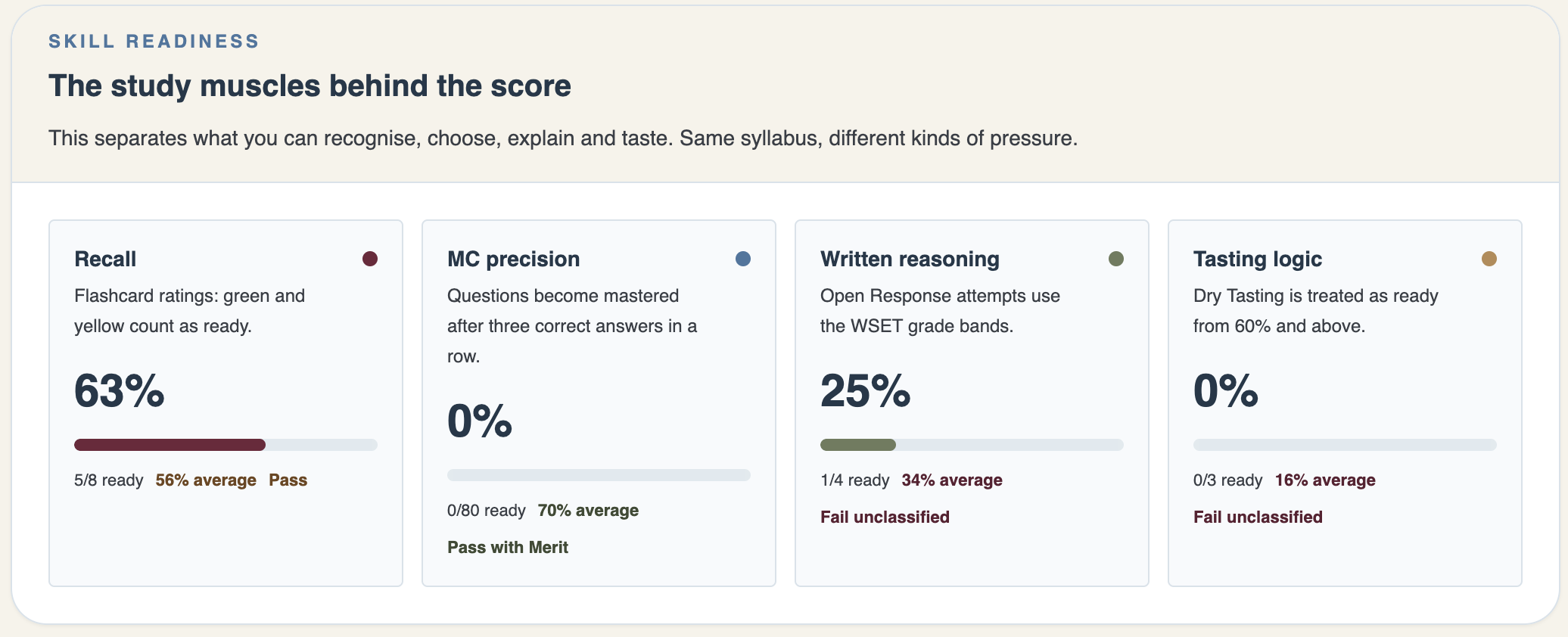
Review your flashcard ratings, question results and tasting practice in one place. This screenshot shows the progress view included in the full course.
Access
Choose your D5 access
Choose 12-month access or a monthly subscription to D5 Fortified Wines. Practise across the D5 chapters and return to your saved progress whenever you study.
Check your answers against the explanations and use the marking breakdowns to see which points you missed.
What do I get with D5?
D5 includes 618 flashcards, 223 multiple-choice questions, 37 open-response questions, 29 tasting reference wines with practice flights based on recent exams, revision cards, HoverFlow and progress tracking.
How long do I have access?
One-time access is valid for 12 months from purchase. If you choose the monthly option, access continues while the subscription is running.
Is this official WSET material?
No. Vineflow is not official WSET material, is not endorsed by WSET, and is not an Approved Programme Provider. It is an independent self-study and revision tool designed around Diploma-level learning needs, and should be used alongside your official course materials and APP guidance.
Which fortified wine styles are covered?
D5 focuses on the principal fortified wine styles and production methods: Sherry, Port, Madeira, Vins doux naturels and Rutherglen Muscat, with attention to climate, grapes, fortification, maturation, style outcomes and commercial context.
Does it include tasting practice?
Yes, as self-revision. The tasting tools support structured evaluation: appearance, nose, palate, conclusions and style evidence. They help you practise how a conclusion is supported, but they are not a personally guided tasting session or a replacement for feedback from a tutor or APP.
How does it support my exam preparation?
Review key facts with flashcards and multiple-choice questions. Practise written answers and tasting, then compare your work with the model answers and reference profiles. Use your progress to choose what to review next.